
California Demolition Contractor Insurance: What Contractors Need
Updated: Sep 2
Demolition work is high risk—no way around it. Whether you're tearing down structures, removing concrete, or clearing a site for new construction, one wrong move can lead to major property damage, injuries, or environmental issues. The question many contractors ask is: what insurance do I actually need to stay protected and win jobs in California?
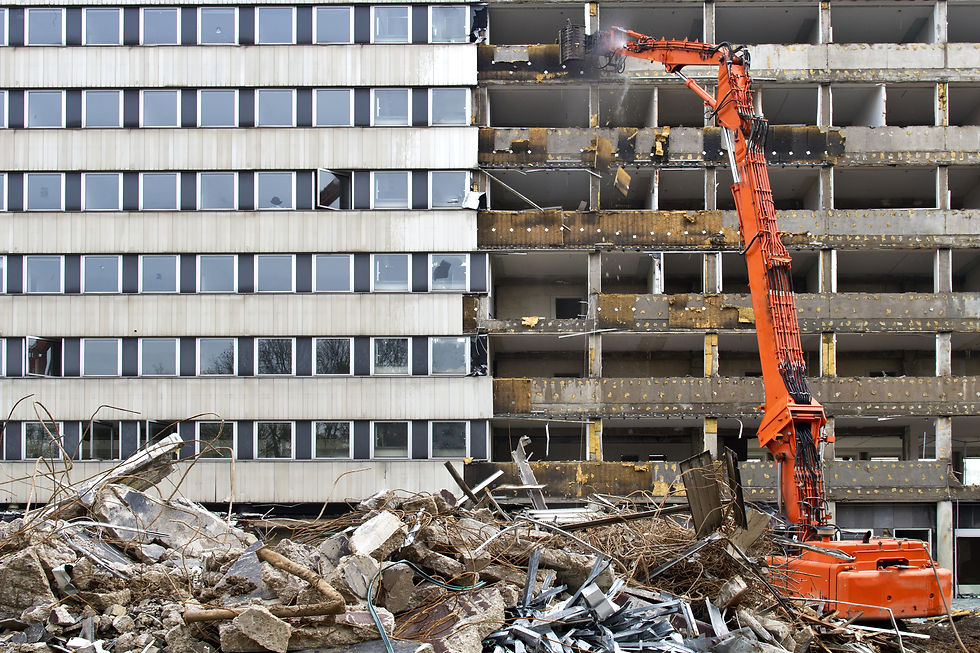
In this guide, we’ll cover California demolition contractor insurance: what contractors need, including required coverages, real-world risks, and what drives your insurance costs.
What Is Demolition Contractor Insurance?
Demolition contractor insurance is not one single policy. It’s a combination of coverages built to protect your business from the unique risks of demolition work.
Demolition contractors regularly deal with:
Structural collapse risks
Flying debris and dust exposure
Underground utilities and 811 locates
Hazardous materials like asbestos or lead
Heavy equipment operations
Because of this, your insurance needs are more complex than general construction.
Quick Answer: What Insurance Do California Demolition Contractors Need?
Most California demolition contractors need:
General liability insurance for third-party injury and property damage
Workers’ compensation insurance (required if you have employees)
Commercial auto insurance for work vehicles
Inland marine insurance (equipment floater) for machines
Pollution liability insurance for environmental risks
While not all policies are required by law, most are required by general contractors, municipalities, and project owners before you can start work.
Costs vary widely depending on job type, equipment value, payroll, and claims history. Smaller operations may pay a few thousand annually, while larger demolition contractors pay significantly more.

Why Demolition Contractors Face Higher Risk in California
California adds another layer of exposure for demolition contractors. You’re working in densely populated areas, often with older structures and strict environmental rules.
Common challenges include:
Unknown utilities or outdated site plans
Tight urban job sites with nearby structures
Strict air quality and dust regulations
Hazardous material handling requirements
Before starting any dig or demo work, you must follow utility locate laws. Learn more at USA North 811: https://usanorth811.org/
Even when you follow every step, accidents can still happen—and demolition claims can escalate quickly.
Core Insurance Coverages Demolition Contractors Need
A strong insurance plan uses multiple policies working together. Here’s how each one helps protect your business.
General Liability Insurance
General liability insurance covers third-party bodily injury and property damage.
Examples:
Debris damages a neighboring building
A pedestrian is injured near your job site
Demolition dust causes property damage complaints
This is usually required to get a certificate of insurance (COI) before working with a GC.
Workers’ Compensation Insurance
Workers’ compensation covers employee injuries and lost wages.
California requires this coverage if you have employees.
Examples:
A worker is injured during structural teardown
A crew member is hurt operating heavy equipment
This policy protects both your employees and your business.
You can review California requirements through the Department of Industrial Relations: https://www.dir.ca.gov/dwc/
Inland Marine (Equipment Floater)
An inland marine policy, also called an equipment floater, covers your equipment while it moves between job sites or is used in the field.
Examples:
A skid steer is stolen from a demo site
A excavator is damaged during a structural collapse
Equipment is damaged during transport
For demolition contractors, equipment is a major investment, making this coverage essential.
Commercial Auto Insurance
Commercial auto insurance covers your trucks and hauling vehicles.
Examples:
A dump truck hauling debris causes an accident
A driver damages a structure while backing up
Personal auto insurance won’t cover business use—especially in demolition work.
Pollution Liability Insurance
Demolition often involves environmental hazards. Pollution liability insurance helps cover contamination and cleanup costs.
Examples:
Dust or debris spreads hazardous materials
Fuel or hydraulic fluid leaks contaminate soil
Improper disposal leads to environmental damage
For more on environmental safety standards, visit the EPA: https://www.epa.gov/
Umbrella Insurance
Umbrella insurance provides additional liability protection above your existing policies.
Examples:
A major collapse damages multiple properties
A large lawsuit exceeds your general liability limits
This is especially important for large demolition jobs or commercial contracts.
California-Specific Requirements and Expectations
Even when not legally required, insurance is often required by contract.
Contractor Licensing
Demolition contractors in California typically operate under licenses issued by the Contractors State License Board (CSLB). While insurance rules vary, proper coverage is expected when bidding jobs.
Certificates of Insurance (COIs)
Most project owners will require a COI before work begins. This document shows:
Active insurance coverage
Policy limits
Additional insured endorsements
Contract-specific requirements
Missing or incorrect coverage can delay or cancel your job.
Environmental and Safety Regulations
California has strict rules for:
Dust control
Hazardous material removal
Waste disposal
These regulations increase the importance of pollution liability and proper risk management.
What Affects Demolition Contractor Insurance Costs?
Insurance costs vary based on several factors tied to your business.
Business Size
Payroll
Number of employees
Annual revenue
Type of Work
Residential vs. commercial demolition
Interior vs. full structural teardown
Hazardous material handling
Equipment Value
Number of machines
Replacement cost
Claims History
Past accidents or damage claims
Safety record
Location
Urban projects often carry higher risk
Because demolition is considered high risk, premiums are typically higher than standard contracting work.
Real-World Demolition Risks Contractors Face
If you're in the field, these scenarios are all too common:
A wall collapses unexpectedly and damages a nearby property
Debris hits a vehicle or injures a bystander
Dust spreads and triggers complaints or claims
Equipment malfunctions during a critical phase
Each situation can lead to lawsuits, repairs, and delays—making insurance critical.
Common Insurance Mistakes to Avoid
Demolition contractors often make these costly mistakes:
Only carrying general liability without pollution coverage
Underinsuring expensive equipment
Using personal auto insurance for business vehicles
Not reviewing contract-specific requirements
Choosing the lowest price instead of proper coverage
Insurance should be built around your actual job risks—not just minimum requirements.
How to Build the Right Insurance Plan
No two demolition businesses are the same. Your insurance should reflect how you actually work.
A knowledgeable agent will ask:
What type of demolition do you perform?
Do you handle hazardous materials?
What equipment do you own?
How many employees do you have?
What types of projects do you bid?
From there, they can design a policy that fits your real-world exposure.
FAQ: California Demolition Contractor Insurance
1. Is insurance required for demolition contractors in California?
Workers’ compensation is required if you have employees, and commercial auto is required for vehicles. General liability is usually required by contract.
2. How much does demolition contractor insurance cost?
Costs vary widely depending on payroll, equipment, and project type. Small contractors may pay a few thousand annually, while larger operations pay significantly more.
3. Do demolition contractors need pollution liability insurance?
Yes, it’s highly recommended due to dust, debris, and potential hazardous material exposure.
4. What does inland marine insurance cover?
It covers your equipment while it’s being transported or used on job sites.
5. Will insurance cover structural collapse damage?
It may cover resulting damage depending on your policy, but coverage varies. Always review details with your agent.
Protect Your Demolition Business the Right Way
Demolition comes with real risk. One bad collapse, one missed detail, or one unexpected issue can lead to serious financial exposure.
At Excavating Insurance Partners, we specialize in helping demolition, excavation, and site-work contractors get coverage that matches how they actually operate.
Call 317-942-0549 or visit https://www.excavatinginsurancepartners.com/ to request a free quote and make sure your demolition business is fully protected.


Comments