
Demolition Attachments: Insuring Shears, Processors, and Breakers
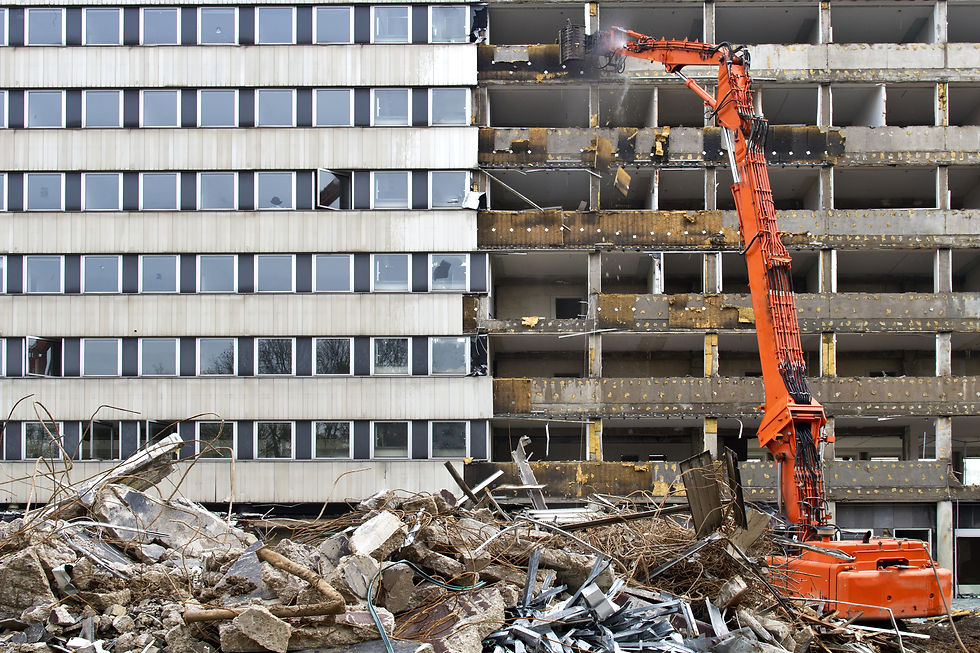
For many demolition contractors, the most valuable piece of equipment on a jobsite isn't always the excavator. Often, it's the attachment hanging from the end of the stick. Hydraulic shears, concrete processors, and breakers can represent a significant investment and are critical to keeping projects moving.

The challenge is that many contractors focus on insuring the machine itself while overlooking the specialized demolition attachments that generate revenue every day. Understanding how to properly insure demolition attachments can help reduce coverage gaps and better protect your investment.
Why Demolition Attachments Need Special Insurance Attention
Demolition attachments work in some of the harshest conditions in construction.
Unlike standard excavation buckets, demolition tools are exposed to constant impact, vibration, heavy loads, and debris. Whether you're tearing down concrete structures, processing scrap metal, or breaking foundations, these tools take a beating every day.
Common demolition attachments include:
Hydraulic shears
Concrete processors
Hydraulic breakers
Pulverizers
Crushers
Multi-processors
Grapples
Compactors
Rippers
Many of these attachments can cost a substantial amount to replace, making insurance planning an important part of equipment management.
The Real Cost of Losing a Demolition Attachment
When a demolition attachment is stolen or damaged, the loss often extends beyond the replacement value.
Contractors may face:
Project delays
Equipment downtime
Rental expenses
Missed deadlines
Reduced production
Contract penalties depending on project requirements
A broken shear or stolen breaker can affect an entire crew's productivity.
This is especially true on large demolition projects where schedules are closely monitored by GCs (general contractors) and project owners.
What Does It Mean to Schedule Demolition Attachments?
Scheduling equipment means specifically listing the equipment on an insurance policy.
Rather than relying on broad equipment coverage, scheduled equipment is individually identified with details such as:
Make
Model
Serial number
Year
Insured value
Scheduling creates a documented record of ownership and equipment value.
Depending on the policy, scheduled equipment may receive broader protection than equipment that is not specifically listed.
Always review policy language carefully and consult a licensed insurance professional regarding your particular situation.
Why Shears, Processors, and Breakers Are Often Overlooked
Many demolition contractors automatically schedule excavators, skid steers, and loaders.
However, they may overlook:
Hydraulic shears
Concrete processors
Pulverizers
Grapples
Specialized demolition tooling
This often happens because attachments are purchased after the machine or transferred between multiple machines.
As a result, the equipment inventory on the policy may not accurately reflect current operations.
A periodic insurance review can help identify these gaps.
Understanding the Risks Facing Demolition Attachments
Theft
Theft remains one of the biggest threats facing contractor equipment.
Attachments are often easier to steal than full-sized machines because they can be quickly loaded onto trailers and removed from jobsites.
Common theft targets include:
Hydraulic breakers
Shears
Grapples
Compact demolition tools
Specialty processors
Maintaining records and security controls can help reduce exposure.
Accidental Damage
Demolition work involves significant force.
Attachments may experience damage from:
Structural collapse
Equipment rollovers
Falling debris
Transportation accidents
Improper operation
Unexpected impacts
Even experienced operators can encounter situations that result in costly repairs.
Transportation Hazards
Demolition contractors frequently move equipment between projects.
Each move creates additional risk.
Attachments may be exposed to:
Loading accidents
Tie-down failures
Road debris
Trailer accidents
When reviewing insurance coverage, make sure your agent understands how equipment is transported and stored.
Vandalism
Unattended construction sites can attract unwanted attention.
Damage caused by vandalism may create expensive repair bills and project delays.
Proper jobsite security remains an important part of risk management.
Inland Marine Insurance and Demolition Equipment
One of the most common forms of equipment insurance for contractors is inland marine insurance.
Despite the name, inland marine insurance is not limited to water-related operations.
It is commonly used to insure equipment that moves between locations.
For demolition contractors, inland marine insurance may help protect:
Excavators
Shears
Breakers
Processors
Grapples
Portable tools
Specialized contractor equipment
Coverage varies based on policy language, limits, endorsements, and exclusions.
Always review coverage details carefully with a licensed insurance professional.
General Liability Insurance Explained
General liability insurance helps protect contractors against claims involving third-party bodily injury or property damage.
For example, if demolition operations allegedly cause damage to a neighboring building, vehicle, or other property, general liability insurance may respond depending on the circumstances and policy provisions.
General liability insurance generally does not insure damage to your own equipment or attachments.
Because demolition work presents unique risks, maintaining appropriate liability protection is an important part of an overall risk-management program.
Commercial Auto Insurance Explained
Commercial auto insurance helps cover vehicles used in business operations.
Examples include:
Dump trucks
Service trucks
Pickup trucks
Certain trailers
Coverage may apply to covered accidents involving insured vehicles.
Commercial auto insurance is generally separate from contractor equipment coverage and does not replace the need to schedule valuable demolition attachments.
Workers' Compensation Insurance Explained
Workers' compensation insurance helps provide benefits for employees who sustain work-related injuries or illnesses, subject to state laws and policy provisions.
Demolition operations involve significant jobsite hazards.
Workers' compensation requirements vary by state and can change over time, so contractors should verify current requirements with state regulators and consult licensed insurance professionals.
Additional workplace safety information can be found through OSHA:
Umbrella Insurance Explained
Umbrella insurance provides an additional layer of liability protection above certain underlying policies.
Many demolition contractors purchase umbrella insurance because projects frequently involve:
Heavy equipment
Public streets
Utilities
Adjacent structures
High-value properties
If a covered liability claim exceeds the limits of an underlying policy, umbrella insurance may provide additional protection depending on policy terms and conditions.
Coverage varies based on policy language.
How to Properly Value Demolition Attachments
One of the biggest mistakes contractors make is undervaluing specialized attachments.
To help establish values, maintain:
Purchase records
Dealer invoices
Equipment photos
Maintenance records
Serial numbers
Financing documents
Some policies may use actual cash value, replacement cost, or other valuation methods.
The method used depends on the policy language and endorsements.
A licensed insurance agent can help explain how valuation applies to your specific policy.
Best Practices for Insuring Demolition Attachments
Contractors can improve equipment protection by following a few simple practices.
Maintain an Updated Equipment Schedule
Review your equipment list regularly.
Update the schedule when you:
Purchase new attachments
Sell equipment
Trade equipment
Upgrade tooling
Increase equipment values
Track Serial Numbers
Serial numbers help establish ownership and identification after a loss.
Keep records in both digital and physical formats.
Photograph Equipment
Regular photos create a valuable record of equipment condition and ownership.
This documentation may be useful during the claims process.
Improve Jobsite Security
Consider:
Fenced storage areas
Security cameras
Lighting
Controlled access
Equipment tracking systems
Review Coverage Annually
As businesses grow, insurance needs change.
Annual reviews help ensure equipment schedules accurately reflect current operations.
The Importance of Risk Management
Insurance is only one part of protecting a demolition business.
Contractors should also prioritize:
Operator training
Equipment inspections
Maintenance programs
Jobsite safety planning
Theft prevention measures
The National Safety Council provides useful construction safety resources:
Combining strong risk management practices with appropriate insurance coverage can help reduce operational disruptions after a loss.
FAQ
Are hydraulic shears automatically covered under equipment insurance?
Not always. Coverage depends on the policy. Some attachments may need to be specifically scheduled to receive coverage.
Should demolition attachments be listed separately on a policy?
Many contractors choose to schedule high-value attachments separately because of their replacement cost and specialized nature.
Does inland marine insurance cover demolition attachments?
Many contractor equipment policies use inland marine coverage forms. Coverage depends on the policy's terms, conditions, limits, and exclusions.
What information should I keep for demolition attachments?
Maintain serial numbers, invoices, photographs, maintenance records, and purchase documentation whenever possible.
How often should I review my attachment schedule?
At least annually and whenever equipment is purchased, sold, upgraded, or transferred between operations.
Protect Your Most Valuable Demolition Tools
Your excavator may power the job, but your shears, processors, breakers, and other demolition attachments are often what make the work possible. If those assets are not properly scheduled and valued on your insurance policy, you could discover coverage gaps when you need protection most.
The team at Excavating Insurance Partners understands the unique equipment risks faced by demolition, excavation, site-work, land clearing, septic, and drilling contractors across the country. We can help you review your equipment schedule and better understand your coverage options.

Request a free, no-obligation quote today:
Speak with a licensed insurance professional to discuss your specific operation, equipment values, and insurance needs.
Comments