
Insurance for Demolition Contractors: Coverages You Can't Skip
Updated: Sep 2
Demolition work is risky—there’s no way around it. One wrong move, one unstable structure, or one missed hazard can turn into property damage, injury, or a major financial hit. And if your insurance isn’t set up right, you’re the one left holding the bill.
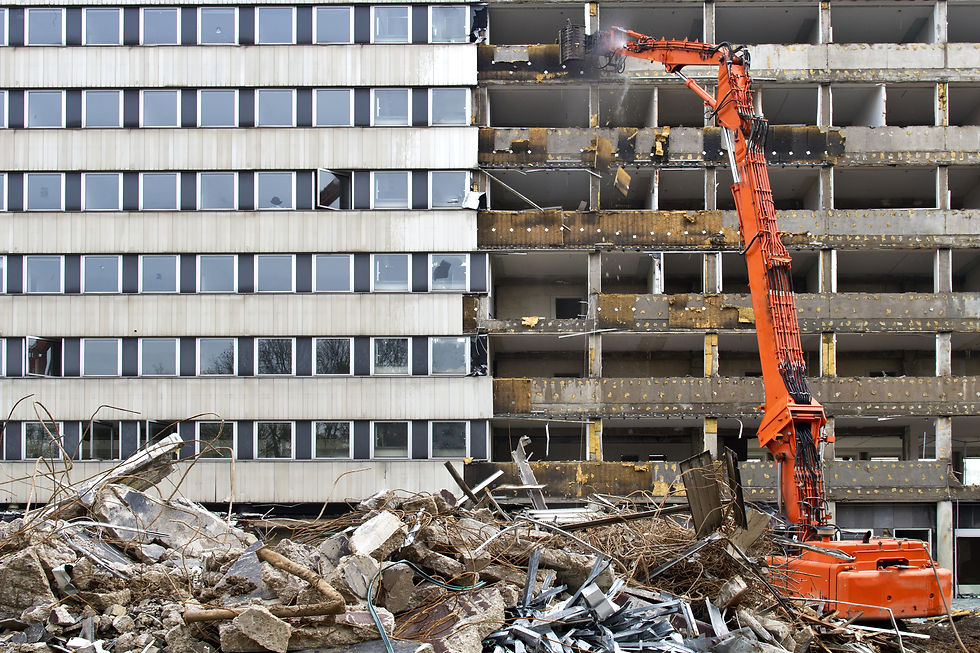
That’s why insurance for demolition contractors matters more than most trades. Let’s break down the coverages you simply can’t skip if you want to stay protected and keep landing jobs.
What Insurance Do Demolition Contractors Need? (Straight Answer)
Demolition contractors need a combination of insurance coverages to protect against property damage, injuries, equipment loss, and environmental risks.
At a minimum, most demolition contractors carry:
General liability insurance
Inland marine insurance (equipment coverage)
Workers’ compensation insurance
Commercial auto insurance
Pollution liability insurance
Each of these protects a different part of your business. Skipping even one can leave a major gap.

Why Demolition Contractors Need Specialized Insurance
Demolition isn’t just teardown work—it’s controlled risk.
You’re dealing with:
Structural collapse
Falling debris
Unknown building conditions
Possible hazardous materials like asbestos
Tight job sites near other properties
Even if you follow safety practices and proper procedures—like checking for utilities or hazardous materials—things can still go wrong.
Insurance is what keeps one mistake from turning into a business-ending loss.
For safety and demolition guidelines, you can review OSHA’s construction safety standards here: https://www.osha.gov/construction
General Liability Insurance: Your First Line of Defense
General liability insurance is the foundation of your coverage. It protects your business if you cause damage to someone else’s property or injure a third party.
This is usually the first thing a general contractor (GC) checks when reviewing your certificate of insurance (COI).
It may cover:
Damage to neighboring structures
Injury to bystanders or property owners
Debris-related damage
For example, if part of a structure falls and damages an adjacent building, general liability may help cover the cost—depending on your policy.
Because demolition carries higher risk, this coverage is critical and often requires higher limits.
Inland Marine Insurance: Protecting Your Equipment
Your machines take a beating in demolition work. Between debris, uneven ground, and transport, equipment is constantly exposed.
An inland marine policy (also known as an equipment floater) covers your machines wherever they operate—not just at a fixed location.
It may cover:
Theft from job sites
Damage from rollovers or accidents
Fire and vandalism
For example, if your excavator with a demolition attachment is stolen overnight, inland marine insurance may respond.
Without it, you’d have to replace that equipment out of pocket.
Workers’ Compensation Insurance: Protecting Your Crew
Workers’ compensation insurance covers medical expenses, lost wages, and rehab costs if an employee is injured on the job.
Demolition work carries serious injury risks due to:
Structural collapse
Falling materials
Equipment accidents
Workers’ comp may cover:
Emergency medical care
Ongoing treatment
Lost income during recovery
Most states require this coverage if you have employees. Learn more about requirements from the U.S. Department of Labor: https://www.dol.gov/general/topic/workcomp
Skipping workers’ comp isn’t just risky—it can lead to fines and lawsuits.
Commercial Auto Insurance: Covering Your Vehicles on the Road
If you’re hauling debris, moving equipment, or transporting crews, your vehicles are exposed to daily risk.
Commercial auto insurance covers vehicles used for business purposes.
It may cover:
Accidents while transporting equipment
Property damage from vehicle collisions
Injury to others on the road
Personal auto policies usually don’t cover business use—especially when heavy equipment and trailers are involved.
Pollution Liability Insurance: The Coverage Many Contractors Miss
This is one of the most overlooked—and important—coverages in demolition.
Pollution liability insurance helps cover environmental damage and cleanup costs caused by your work.
It may cover:
Asbestos exposure (if properly handled and disclosed)
Lead paint contamination
Fuel or chemical spills
Dust or debris affecting nearby areas
For example, if demolition releases contaminants into the soil or air, cleanup costs can be significant. This policy may help, depending on your coverage.
You can explore environmental considerations for construction projects through the EPA: https://www.epa.gov
Additional Coverages to Consider
Depending on your operation, you may need more than the basics.
Some additional options include:
Umbrella insurance — provides extra liability protection above your base policy limits
Contractor’s tools coverage — protects smaller tools and equipment
Professional liability — for design or consultation errors (less common in demo, but applicable in some cases)
Your coverage should match the type of work you’re doing—not just a generic package.
Common Insurance Gaps in Demolition Work
Many contractors think they’re covered—until they’re not.
Here are some common gaps:
No pollution liability coverage
Equipment underinsured or excluded
Missing endorsements for demolition operations
Liability limits too low for GC requirements
These gaps can create serious problems during a claim.
Real-World Examples of Why Coverage Matters
Here’s how these coverages play out on real job sites.
If a wall collapses unexpectedly and damages a neighboring structure, general liability may help cover the damage.
If your excavator is damaged during a demolition job, inland marine coverage may respond depending on the cause.
If a worker gets injured by falling debris, workers’ compensation handles medical costs and lost wages.
If hazardous material is released during demolition, pollution liability may help with cleanup costs.
Each policy plays a specific role in protecting your business.
How Insurance Helps You Win More Jobs
Insurance isn’t just about protection—it’s also about credibility.
Most GCs require:
Proof of insurance (COI)
Specific liability limits
Additional insured endorsements
Without the right setup, you may not even be considered for certain projects.
Strong insurance coverage helps you:
Qualify for higher-value jobs
Build trust with GCs
Stay competitive in bids
How to Make Sure You’re Fully Covered
To avoid surprises, take these steps:
Review your policies annually
Work with a specialist in demolition insurance
Match your coverage to your contracts
Keep documentation for job safety and procedures
Verify endorsements for demolition work
Insurance should evolve as your business grows.
Frequently Asked Questions
What insurance is required for demolition contractors?
Requirements vary by state and job, but most contractors need general liability and workers’ compensation. GCs may require additional coverage.
Is demolition insurance more expensive than other contractor insurance?
Often yes, because demolition carries higher risk exposure, especially with structural work and debris hazards.
Does insurance cover damage to nearby buildings?
General liability may cover this, depending on your policy and the circumstances of the damage.
Do I need pollution liability insurance for demolition?
Many contractors do, especially when working on older buildings that may contain hazardous materials.
Can I get insurance as a small demolition contractor?
Yes. Even small or one-person operations can carry essential coverage to protect their business and qualify for jobs.
Final Thoughts: Don’t Leave Gaps in Your Coverage
Demolition work comes with real risks—there’s no way to eliminate them completely. But the right insurance plan helps you manage those risks and keep your business moving forward.
Skipping key coverages to save money upfront can cost you much more later. The goal is to protect your crew, your equipment, and your reputation.
Get a Free Demolition Insurance Quote
At Excavating Insurance Partners, we specialize in helping demolition and site-work contractors build insurance plans that match how they actually work.
If you want to make sure you’re covered where it matters most, request a free, no-obligation quote today.

Comments