
Demolition Liability Insurance: Covering Collapse and Debris Risk
Updated: Sep 1
If you’ve ever watched a wall come down the wrong way or seen debris land closer to a neighboring structure than planned, you already know how fast things can go sideways in demolition work. Even when you follow your plan, control measures, and safety checks, there’s still risk you can’t eliminate.
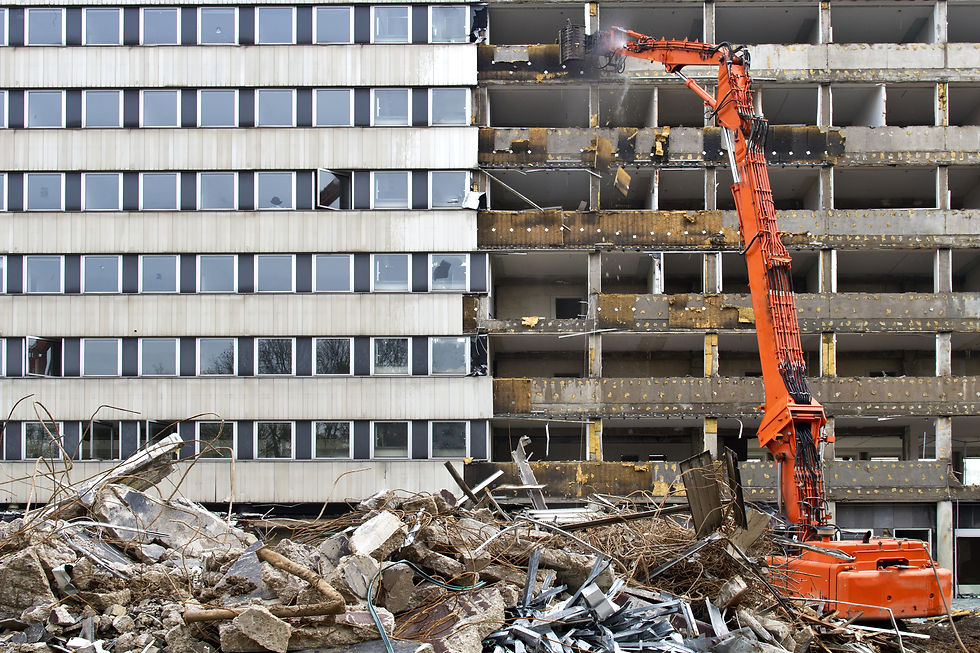
That’s where demolition liability insurance comes in. It’s designed to help protect your business when collapse or debris damage leads to property loss or injury claims. Let’s break down how it works and why it’s critical for demolition contractors.
What Does Demolition Liability Insurance Cover? (Straight Answer)
Demolition liability insurance—usually part of a general liability policy—may cover property damage or injuries caused by your demolition operations, including collapse incidents and debris-related accidents.
It typically helps with:
Damage to nearby buildings from structural collapse
Debris impacting adjacent properties
Injury to third parties (not your employees)
Legal defense costs if you’re sued
However, coverage depends on your policy wording, limits, and whether proper endorsements are included for demolition work.
Why Collapse and Debris Risk Are a Big Deal
Demolition work is unpredictable. You’re intentionally taking down structures, often in tight spaces, sometimes near active buildings or public areas.
Key risks include:
Unplanned structural collapse
Flying or falling debris
Vibration damage to nearby structures
Unknown building materials or conditions
Even with planning, a structure can shift differently than expected. That’s why liability coverage is essential, not optional.
For safety standards and demolition best practices, OSHA provides guidance at https://www.osha.gov/construction
Understanding General Liability in Demolition
General liability insurance is the core coverage that responds to third-party damage and injury claims.
When we talk about “demolition liability insurance,” we’re usually referring to general liability with proper endorsements for demolition activities.
This coverage may help with:
Repair costs for damaged neighboring buildings
Medical expenses if a third party is injured
Legal costs if a claim turns into a lawsuit
For example, if part of a building collapses unexpectedly and damages a nearby property, general liability may respond depending on the situation.
Without proper coverage, those costs come directly out of your pocket.
The Role of Collapse Coverage
Collapse exposure is one of the biggest concerns in demolition.
Some general liability policies include limitations or exclusions related to collapse, especially for high-risk operations.
That’s why it’s important to make sure your policy:
Specifically includes demolition operations
Does not exclude structural collapse scenarios
Matches the type of work you actually perform
Not all policies treat collapse the same way, so reviewing your coverage with a knowledgeable agent is critical.
Debris Risk and Why It Matters
Debris isn’t just messy—it’s dangerous.
In demolition work, debris can:
Damage nearby buildings
Block access roads or sidewalks
Injure pedestrians or workers from other trades
Liability insurance may cover damage or injury caused by debris, depending on how the incident occurs and your policy terms.
For example, if flying debris damages a parked vehicle near your job site, general liability may apply.
But again, this depends on proper coverage and documentation.
Other Coverages That Work Alongside Liability
General liability doesn’t cover everything. Demolition contractors need a full insurance setup to stay protected.
Here are the key supporting coverages and why they matter.
Inland Marine Insurance (Equipment Floater)
An inland marine policy covers your equipment while it moves between job sites or operates off your main location.
It may cover:
Excavators with demolition attachments
Skid steers and compact equipment
Tools and attachments
If your machine is damaged during a collapse or struck by falling debris, inland marine insurance may apply depending on the cause.
Workers’ compensation covers your employees if they get injured on the job.
It includes:
Medical expenses
Lost wages
Rehabilitation costs
This is important because general liability does not cover employee injuries.
Most states require workers’ comp if you have employees. Learn more at https://www.dol.gov/general/topic/workcomp
Commercial auto insurance covers vehicles used for your business, including trucks and trailers.
It may apply if:
Debris falls during transport
An accident occurs while hauling materials
Property damage results from vehicle use
Personal auto insurance typically won’t cover these risks.
Pollution Liability Insurance
Demolition work often exposes environmental risks.
Pollution liability insurance helps cover:
Dust or airborne contaminants
Hazardous material exposure (like asbestos or lead)
Soil or groundwater contamination
For example, if demolition releases contaminants into the surrounding area, cleanup costs may be significant. This policy may help depending on your coverage.
You can find more info on environmental risks from the EPA at https://www.epa.gov

Common Gaps in Demolition Liability Coverage
Many contractors assume they’re fully covered—until they’re not.
Here are common gaps to watch for:
No endorsement for demolition operations
Exclusions for collapse-related damage
Liability limits too low for project size
No pollution coverage for environmental exposure
These gaps can create major financial exposure during a claim.
Real-World Scenarios You Should Think About
Let’s look at how demolition liability insurance may apply in real situations.
Scenario 1: Unplanned Collapse
A section of a structure collapses unexpectedly and damages a neighboring wall. General liability may help cover repair costs.
Scenario 2: Flying Debris
Debris strikes a nearby vehicle during demolition. Liability coverage may apply, depending on policy terms.
Scenario 3: Injury to Bystander
Apedestrian is injured by falling material outside a job site. General liability may respond to medical and legal claims.
Scenario 4: Dust Contamination
Dust from demolition affects adjacent businesses. Pollution liability may help address cleanup and claims.
Each situation depends on coverage details, documentation, and circumstances.
Why General Contractors Care About Your Liability Coverage
Before you can start work, most general contractors will ask for proof of insurance.
This comes in the form of a certificate of insurance (COI).
They’re looking for:
Active liability coverage
Sufficient policy limits
Additional insured status
If your coverage doesn’t meet their requirements, you may lose the job—no matter how competitive your bid is.
How Much Liability Coverage Do You Need?
Coverage needs vary depending on your work.
Factors include:
Type of demolition projects (residential vs. large commercial)
Job site location (urban vs. rural)
Contract requirements
Risk level of operations
Higher-risk jobs often require higher limits.
While premiums vary widely, contractors with more exposure, larger jobs, or higher limits typically pay more.
How to Reduce Risk on the Job Site
Insurance is one piece of the equation. Reducing risk helps protect your business and may help keep premiums manageable over time.
Practical steps include:
Conducting pre-demolition inspections
Following engineered demolition plans
Using proper debris containment methods
Documenting all safety procedures
Securing job sites
Risk management supports your insurance—not replaces it.
Frequently Asked Questions
Does demolition liability insurance cover structural collapse?
It may, depending on your policy and whether collapse is included or excluded in your coverage.
Is debris damage covered under general liability?
In many cases, yes, but coverage depends on how the damage occurs and your policy details.
Do I need pollution liability for demolition work?
Many contractors do, especially when working on older buildings or sites with potential contaminants.
Does general liability cover my employees?
No. Employee injuries are typically covered under workers’ compensation insurance.
Can I get liability insurance for small demolition jobs?
Yes. Even small contractors can carry liability coverage to protect against property damage and injury claims.
Final Thoughts: Protect Against the Risks You Can’t Control
Demolition work will always carry risk—especially when it comes to collapse and debris. You can plan carefully, follow procedures, and still face unexpected situations.
The right demolition liability insurance setup helps protect you when those moments happen. It’s not just about meeting requirements—it’s about keeping your business running after a loss.
Get a Free Demolition Insurance Quote
At Excavating Insurance Partners, we help demolition contractors build insurance coverage that actually matches the way they work.
If you want to review your liability coverage or get a quote tailored to your operation, request a free, no-obligation quote today.

Comments