
Demolition Contractor Insurance: A Complete Coverage Guide
Updated: Sep 2
Demolition work comes with real risk—unstable structures, falling debris, tight job sites, and unknown hazards behind every wall. If something goes wrong, the costs can stack up fast. That’s why having the right insurance isn’t just a formality—it’s part of running a serious demolition business.
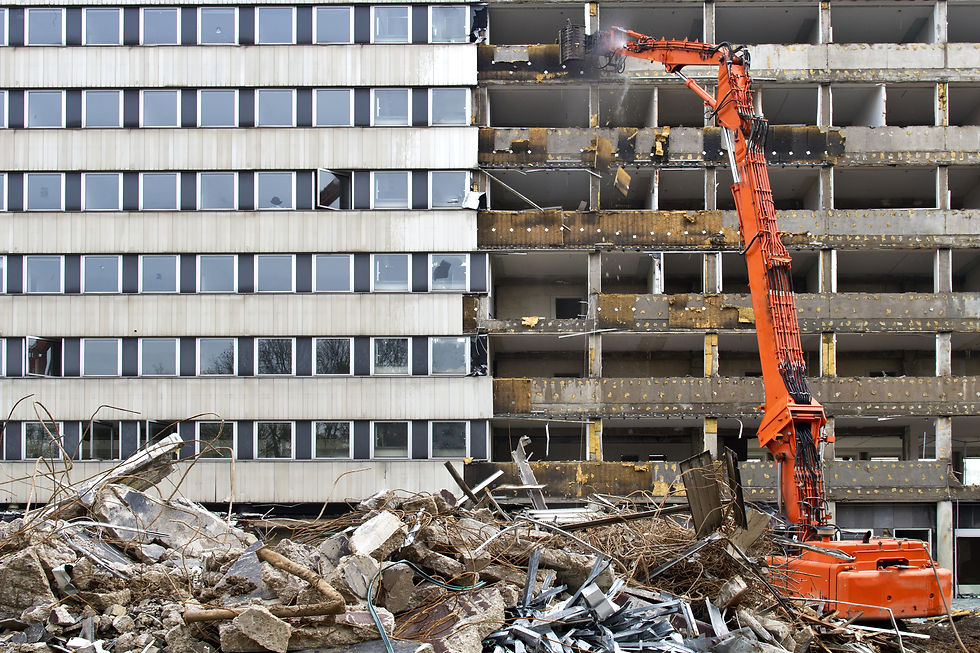
In this guide, we’ll break down demolition contractor insurance in plain English so you understand what each coverage does, why it matters, and how to build a setup that actually protects you on the job.
What Is Demolition Contractor Insurance? (Straight Answer)
Demolition contractor insurance is a group of insurance policies designed to protect your business from property damage, injuries, equipment loss, and environmental risks related to demolition work.
Most demolition contractors carry:
General liability insurance
Inland marine insurance (equipment coverage)
Workers’ compensation insurance
Commercial auto insurance
Pollution liability insurance
Each policy covers a different risk, and together they form a safety net for your operation.
Why Demolition Contractors Need Specialized Coverage
Demolition isn’t like standard construction work. You’re tearing things down, often in unpredictable conditions.
You may be dealing with:
Structural collapse risks
Dust and airborne contaminants
Adjacent buildings or occupied spaces
Utilities that aren’t fully documented
Heavy equipment in confined areas
Even if you follow safety procedures and call in 811 locates (https://call811.com), you can’t eliminate every risk. Insurance fills the gaps where planning alone can’t protect you.
The Core Coverages Every Demolition Contractor Needs
Let’s walk through the policies that make up a complete demolition insurance plan.
General liability insurance is the backbone of your coverage. It protects your business if you cause damage to someone else’s property or injure a third party.
This is typically required by general contractors (GCs) before you can start work, and they’ll ask for a certificate of insurance (COI) to prove it.
It may cover:
Damage to neighboring buildings during demolition
Debris-related property damage
Injuries to pedestrians or property owners
Legal defense costs if you’re sued
For example, if part of a structure collapses and damages an adjacent building, general liability may respond depending on your policy and conditions.
Because demolition is high risk, having the right endorsements and limits is critical.
An inland marine policy—also called an equipment floater—covers your tools and machinery while they move between job sites.
This is essential for demolition contractors because your equipment is constantly exposed.
It may cover:
Excavators with shears, grapples, or breakers
Skid steers and compact equipment
Attachments and tools
And it may protect against:
Theft from job sites
Damage from accidents or rollovers
Fire, vandalism, or transit damage
For example, if your machine is damaged by falling debris during a teardown, inland marine insurance may apply depending on your policy terms.
Without it, you’re responsible for repair or replacement costs out of pocket.
Workers’ compensation covers medical bills, lost wages, and recovery costs if an employee gets injured on the job.
Demolition is one of the higher-risk trades, with exposure to:
Falling debris
Structural collapse
Equipment accidents
Dust and hazardous materials
Workers’ comp may cover:
Emergency medical care
Ongoing treatment
Rehabilitation
Lost wages
This coverage is required in most states if you have employees. You can learn more at the U.S. Department of Labor: https://www.dol.gov/general/topic/workcomp
It also protects your business from lawsuits related to workplace injuries.
Commercial auto insurance covers vehicles used for business purposes.
For demolition contractors, that includes:
Dump trucks
Pickup trucks
Equipment trailers
It may cover:
Accidents while hauling debris or equipment
Damage to other vehicles or property
Injuries caused by your drivers
Personal auto insurance typically won’t cover business-related use, especially when heavy equipment is involved.
Pollution Liability Insurance
Pollution liability insurance covers environmental risks tied to your work.
This is especially important in demolition because of potential exposure to:
Asbestos
Lead paint
Fuel and chemical spills
Dust contamination
It may cover:
Cleanup costs
Third-party property damage
Legal claims related to environmental impact
For example, if demolition releases contaminants into the air or soil, cleanup can be expensive. This policy may help depending on your coverage.
For more on environmental regulations, the EPA offers guidance at https://www.epa.gov.

Additional Coverages to Consider
Depending on your operation, you may need extra layers of protection.
These can include:
Umbrella insurance — adds extra liability coverage above your base limits
Tool and small equipment coverage — protects smaller tools not listed separately
Builder’s risk — sometimes required in mixed construction/demolition projects
These aren’t always required, but they can help protect larger operations or complex projects.
Common Risks Demolition Insurance Is Designed to Cover
To understand why each policy matters, it helps to look at real risks you face daily:
Unplanned structural collapse
Debris damaging neighboring property
Equipment theft from unsecured sites
Worker injuries on unstable ground
Environmental contamination
No single policy covers all of this. That’s why a layered insurance approach is necessary.
What Demolition Insurance May Not Cover
It’s just as important to understand what’s not covered.
Depending on your policies, exclusions may include:
Faulty workmanship (redoing your own work)
Intentional damage or unsafe practices
Normal wear and tear on equipment
Certain environmental issues without proper coverage
This is where many contractors run into trouble. If you assume you’re covered without reviewing your policy, you could be exposed.
How Insurance Affects Your Ability to Get Work
Insurance isn’t just about protection—it’s also about getting jobs.
General contractors and project owners often require:
Specific liability limits
Additional insured endorsements
Proof of coverage via COIs
If you don’t meet these requirements, you may not be allowed on the site—even if you’ve already won the bid.
Strong insurance coverage helps you:
Qualify for better projects
Build trust with GCs
Stay competitive
How Much Does Demolition Contractor Insurance Cost?
Costs vary widely depending on your operation.
Factors include:
Size of your crew and payroll
Equipment value
Type of demolition work
Claims history
Project locations
A small operation doing light residential demo will typically pay less than a larger contractor handling commercial or structural teardown.
Premiums are based on risk, not just size—so safer operations with good records may see better rates over time.
How to Make Sure You’re Fully Protected
Insurance isn’t set-it-and-forget-it. Your coverage needs to evolve as your business grows.
Here are a few practical steps:
Review your policies annually
Work with an insurance agent who understands demolition
Keep detailed records of jobs and safety measures
Match your coverage to contract requirements
Ask about endorsements for demolition operations
The goal is to make sure your insurance reflects the real risks you take every day.
Frequently Asked Questions
What insurance do demolition contractors need?
Most contractors need general liability, equipment coverage (inland marine), workers’ compensation, commercial auto, and pollution liability.
Is demolition insurance more expensive than other trades?
Often yes, because demolition involves higher risk exposure, especially for collapse and debris damage.
Does general liability cover demolition work?
It may, but only if demolition operations are properly included and not excluded in your policy.
Do I need pollution liability insurance?
Many demolition contractors do, especially when working on older buildings with potential contaminants.
Can I get insurance as a small demolition contractor?
Yes. Even small or one-person operations can carry essential coverage to protect their business.
Final Thoughts: Build Coverage That Matches the Risk
Demolition work will always carry risk—it’s the nature of the job. But the difference between a setback and a shutdown often comes down to your insurance.
The right coverage protects your equipment, your crew, your reputation, and your ability to keep working after something goes wrong.
Don’t treat insurance as a box to check. Treat it as a key part of your business.
Get a Free Demolition Insurance Quote
At Excavating Insurance Partners, we specialize in working with demolition, excavation, and site-work contractors across the United States. We understand the risks you face because we help contractors like you every day.
If you want to review your coverage or get a quote tailored to your operation, request a free, no-obligation consultation today.

Comments